← Science
Adam Savage’s Tested
How to Preserve Centuries-Old Daguerreotypes
⏱ 10 min video · 2 min read25 Jun 2026Worth watching
TL;DR
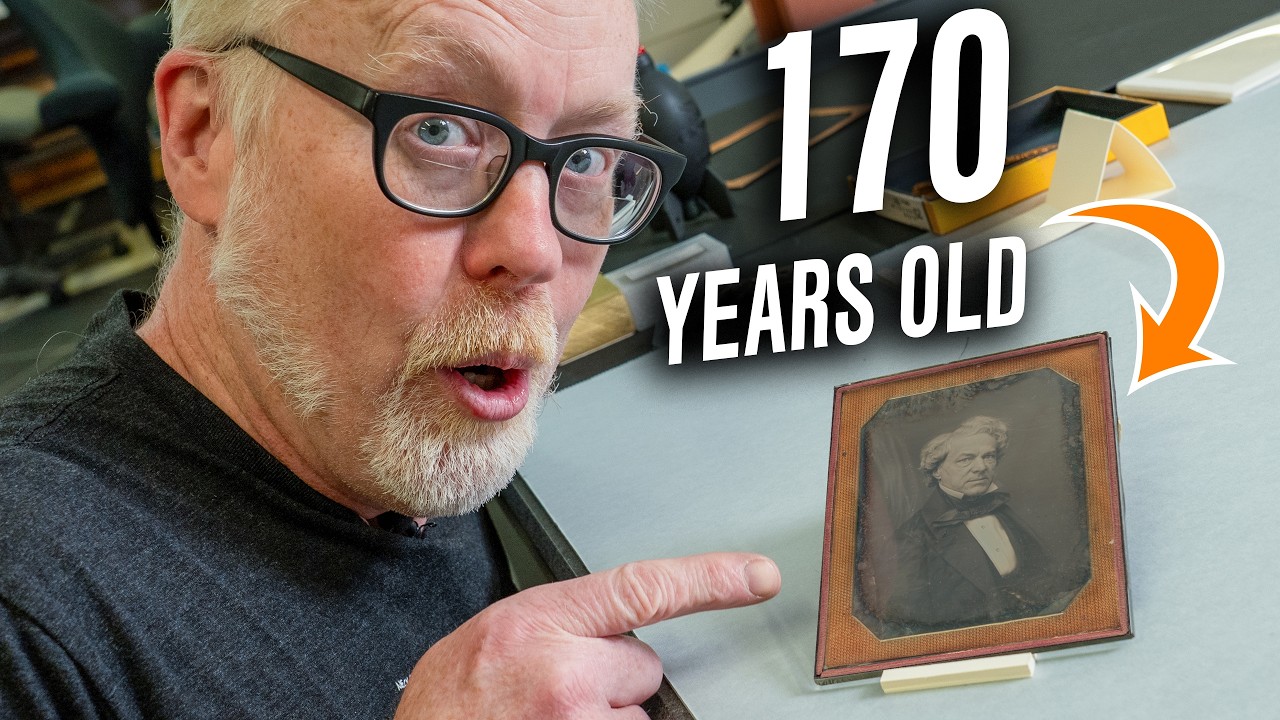
Adam Savage visits photography conservator Christina at the Smithsonian's National Portrait Gallery to learn how daguerreotypes are preserved and resealed. The video covers the extreme fragility of these 19th-century silver-plate images and showcases extraordinary examples including a portrait of John Quincy Adams from c.1842 — believed to be the first known photographic portrait of a US president.
Key points
1
Daguerreotypes are copper plates with silver electroplated or cold-pressed on top; the image layer is less than a nanometer thick and can be wiped away with a single touch
2
Original daguerreotypes were sealed with paper, a brass preserver, and glass to slow tarnish from air exposure — modern resealing uses filmoplast acrylic tape and a Mylar backing sheet to create a protective microenvironment
3
Scotch tape or other pressure-sensitive tape applied by well-meaning previous owners is a major preservation problem that conservators must carefully remove using gentle heat
4
The collection includes a portrait of Thomas Ustick Walter (fourth architect of the US Capitol, c.1851-52), a Henry David Thoreau portrait, a Samuel Morse locket daguerreotype, and a John Quincy Adams portrait from c.1842-43
5
The John Quincy Adams daguerreotype is considered the first known photographic portrait of a US president; Adams wrote to a friend praising the technology but disliking both the sitting process and the resulting image
Key takeaways
→
Never touch the surface of a daguerreotype — the image layer is sub-nanometer thick and irreversible damage can occur from a single swipe
→
Use filmoplast tape (acrylic with paper barrier) and a Mylar backing sheet when resealing daguerreotypes to avoid metal interaction and create a protective microenvironment
→
Heat can be used carefully to remove pressure-sensitive tape from daguerreotype packages — historically justified because heat was already used in the gold-toning step of the original daguerreotype process
Notable quotes
“It almost looks like a mirror.”
“There is a moment of photons and chemicals — 150 years.”
“It is the light from the person in a way that other imagery is not — it is the actual remnant of the actual human.”
Worth watching?
✅
Worth watching the full video?
Watch if you want to see the actual daguerreotypes up close — including the John Quincy Adams portrait — but the key conservation techniques and historical context are all captured here.
Saved you some time? The creator still deserves a like.


Want this for your own channels?
Add the channels you follow. Every new video summarised and in your inbox the moment it drops. From £4/month.
Try it free