
← Claude
Creator Magic
Claude Fable 5 Is BACK (And It's Different)
⏱ 120 min video · 3 min read2 Jul 2026
TL;DR
Creator Mike Russell livestreams his first hands-on session with Claude Opus 5 (referred to as Fable 5 in transcript, corrected to Claude Sonnet/Opus 5 context) immediately after Anthropic released it, demonstrating his AI coding workflow using a custom tool called Tank to build a Balatro game clone, a World Cup betting app, and a Fortnite clone in real time. The video is primarily a practical showcase of how to use Claude 5 efficiently within rate limits using build queues, model tiering, and agentic orchestration.
Key points
1
Claude 5 is available on Anthropic Max plans with 50% of subscription usage allocated to it, and rolls over to pay-as-you-go after July 7, 2026.
2
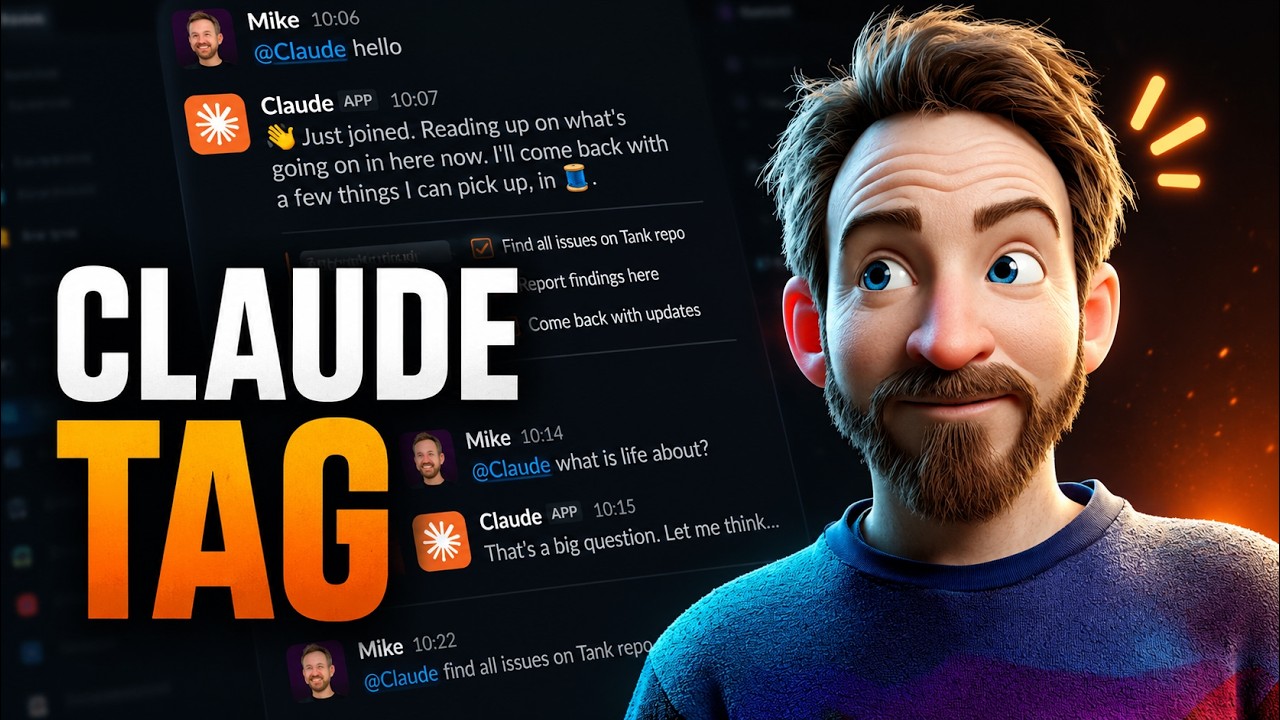
Tank (the creator's custom AI coding harness) allows scheduled tasks, build queues, and multi-model orchestration, letting Claude 5 act as the planning boss while Opus 4.8 does the actual building to conserve tokens.
3
A community tip from Theo advises against using Claude 5 for token-heavy tasks like browser/computer use, web scraping, or code-base analysis — use cheaper models like Haiku or local Qwen 3.6 for those instead.
4
A harness test across 10+ AI models (GPT 5.5, Opus 4.8, Sonnet 4.6, Haiku, Qwen 3.6, Gemini models) found Gemini 3.5 Flash is the best model for creating YouTube chapters, and Sonnet 4.6 outperforms Opus 4.8 for narrative-style chapter writing.
5
The creator built Gaia Stream (a multi-streaming AI agent) overnight using a 32-item build queue, adding features like a LUFS loudness meter, AI metadata generator, auto-transcription via Assembly AI, SRT upload to YouTube, and AI chapter generation.
Actionable insights
→
Use Claude 5 as the planner and research boss, then hand off implementation to Opus 4.8 or cheaper models — this dramatically reduces token burn without sacrificing output quality.
→
Before July 7, 2026 when Claude 5 shifts to pay-as-you-go, use the Max plan to generate detailed markdown research and build plans for all your backlog projects so Opus 4.8 can execute them later.
→
Never use Claude 5 to control a web browser or scrape data — step down to Haiku or a local model like Qwen 3.6 for those tasks, and avoid triggering dynamic deep research workflows unless necessary.
→
Run a model comparison harness to find the best AI for each specific task rather than defaulting to the most powerful model — more powerful does not always mean better for scoped tasks.
→
Schedule Claude 5 tasks to start at the beginning of your 5-hour usage window using Tank scheduled tasks, effectively controlling when your quota resets and maximizing productive uptime.
Notable quotes
“More powerful does not always mean better. And this is why I think we need to set up agentic harnesses that can test like 10, 20 models and literally run tests all the time.”
“When anyone can build anything and copy anything, it is just chaining together the very best practices and optimizing them to the nth degree. That really is, I think, the final frontier, the final moat to solve.”
“There is no moat. Like if you want to steal and build one of these ideas, go for it. My belief is rising tide, all ships rise.”
Worth watching?
⏭️
Worth watching the full video?
Skip the video — the key strategies, workflow tips, and model recommendations are all captured here; the live-coding sections are slow-paced and the actual game outputs are minimal.
Saved you some time? The creator still deserves a like.


Want this for your own channels?
Add the channels you follow. Every new video summarised and in your inbox the moment it drops. From £4/month.
Try it free