TL;DR
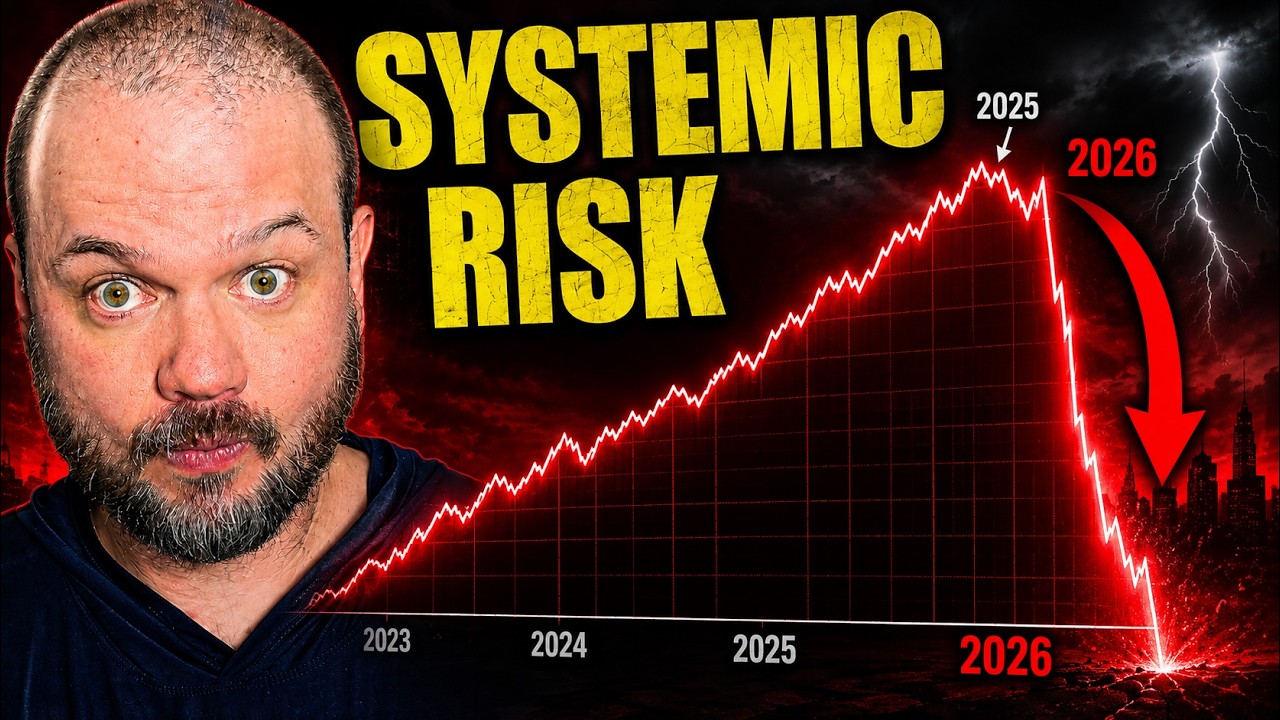
The IMF and major central bank heads are formally warning that AI models like Claude Opus (referred to as 'Mythos' in the video) are creating systemic financial stability risks by enabling mass-scale cyberattacks on banks and financial infrastructure. The core danger is not one elite hacker, but thousands of low-skill actors gaining elite hacking capabilities overnight, potentially triggering a cascade financial crisis similar to 2008.
Key points
1
The IMF published a formal warning titled 'Financial stability risks mount as artificial intelligence fuels cyber attacks,' authored by senior IMF officials, specifically naming Claude Opus and GPT-4.5 as threats.
2
The risk is 'skill compression': tasks that once required expensive expert teams can now be executed by non-experts in any language, massively lowering the barrier to sophisticated cyberattacks.
3
Scale amplification makes this uniquely dangerous: attackers can run hundreds or thousands of parallel AI agent instances simultaneously attacking different codebases or financial institutions.
4
Jerome Powell (Fed Chair), Scott Bessant (US Treasury), Andrew Bailey (Bank of England), Christine Lagarde (ECB), and CEOs of JPMorgan, Goldman Sachs, Bank of America, Citigroup, Morgan Stanley, and Wells Fargo have all been briefed and are raising alarms.
5
A coordinated cyberattack on banking infrastructure would not need to cause actual collapse to trigger a crisis — market panic from ambiguity alone can cause liquidity freezes, deposit flight, and systemic shock.
Key arguments
→
The analogy to watch: Amazon ebook volume tripled after ChatGPT, not because existing authors wrote more, but because millions of new people flooded the market. The same dynamic applied to cyberattacks is the actual threat model.
→
If you have savings, retirement funds, or investments, understand that AI cyber risk is now officially part of the global financial stability map — it is being priced and modeled by institutions that manage systemic risk.
→
The cost-per-exploit metric for running Claude Opus-level models is reportedly low enough that mass parallel attacks become economically viable, making this a scaling problem, not just a capability problem.
Notable quotes
“The danger here isn't that Anthropic created one super hacker. The danger is that it's going to give thousands or tens of thousands of mediocre hackers, maybe even people with barely any tech ability at all, elite level hacking skills.”
“Markets don't need total collapse to panic. They just need ambiguity.”
“Mythos could find and exploit vulnerabilities in every major operating system and web browser, even when used by non-experts.”
Worth watching?
⏭️
Worth watching the full video?
The key arguments and threat model are fully captured here — watch only if you want the specific chart comparisons or the Victor sponsor demo, which are minor additions to what is covered above.
Saved you some time? The creator still deserves a like.


Want this for your own channels?
Add the channels you follow. Every new video summarised and in your inbox the moment it drops. From £4/month.
Try it free