← Science
Adam Savage’s Tested
Why Does a Museum Need 30 Million Specimens?
2 min read28 Apr 2026Worth watching
TL;DR
Adam Savage tours the American Museum of Natural History with a senior official, exploring how the institution manages its 30 million specimens and plans to digitize, AI-enhance, and share that collection globally. The video reveals how one of the world's largest natural history collections is being transformed into a massive open scientific dataset.
Key points
1
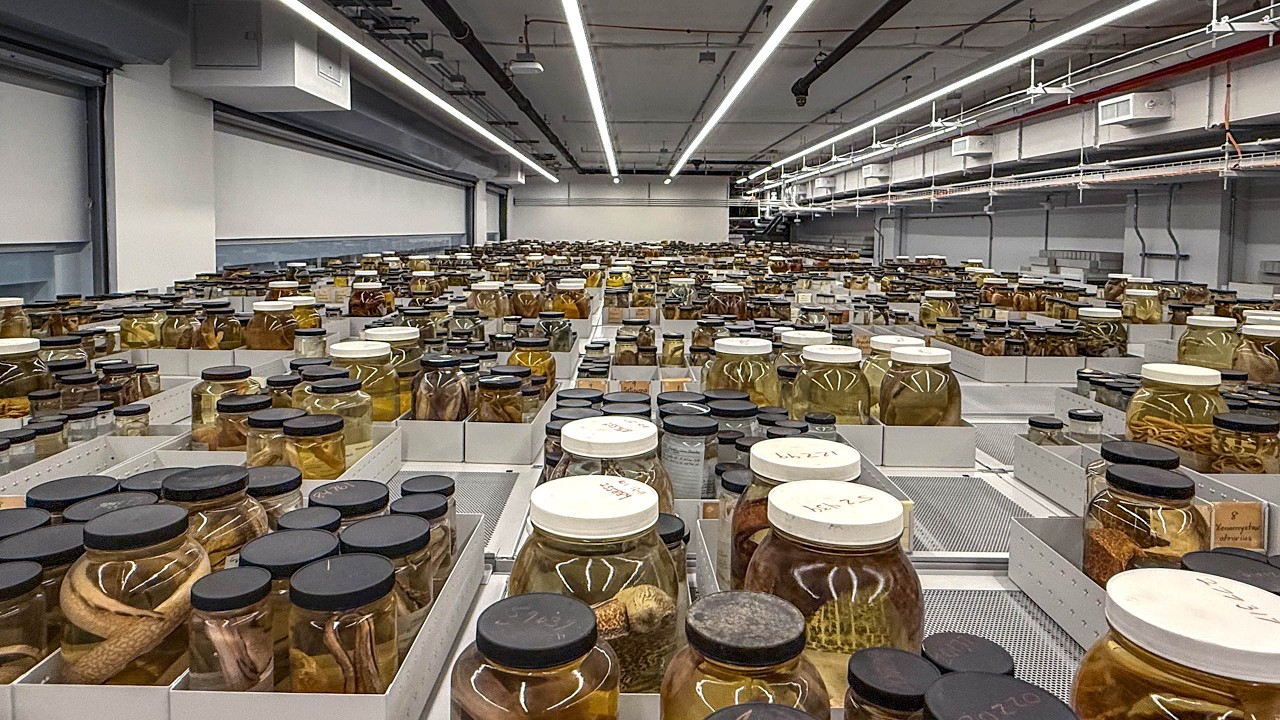
The American Museum of Natural History holds over 30 million objects and specimens collected over 150 years, representing longitudinal environmental and biological data from around the world.
2
The museum is prioritizing digitization in tiers: basic database records for everything, 2D scans for a large portion, and high-resolution 3D CT scans for a select subset, with researchers able to request detailed scans on demand.
3
AI tools are being deployed to read historical handwritten specimen labels, process images, categorize specimens, and identify patterns across the massive dataset that humans could not spot manually.
4
The top 75 largest museum collections globally hold over 1 billion specimens combined, and institutions are actively collaborating to share data, treating the collective dataset as more scientifically valuable than any single collection.
5
The museum views its core mission of discovery, dissemination, and interpretation as unchanged over 150 years, but sees its methods and tools as continuously evolving with new technology.
Key takeaways
→
Museums and research institutions should treat large specimen collections as longitudinal datasets, not just archives, to unlock pattern-based scientific discoveries.
→
Tiered digitization strategies (basic metadata -> 2D images -> 3D scans) are a practical framework for tackling the scale problem of digitizing tens of millions of objects.
→
AI-powered natural language search and label-reading tools are near-term practical solutions for making legacy physical collections accessible to remote researchers and educators.
Notable quotes
“If you look at the top 75 largest museum collections in the world, there are well over a billion specimens, objects and specimens in the collection.”
“We have over 30 million objects and specimens and they really tell the history of the planet and the history of life on the planet.”
“We can still be true to the mission that has been part of our tradition for 150 years yet combine it with the tools that we have today to do just amazing new and exciting things.”
Worth watching?
✅
Worth watching the full video?
Watch if you want the behind-the-scenes walkthrough footage of the museum stacks — the key strategic details are all captured here, but the visual scale of the physical collection is the real payoff of watching.
Saved you some time? The creator still deserves a like.


Want this for your own channels?
Add the channels you follow. Every new video summarised and in your inbox the moment it drops. From £4/month.
Try it free