← Maker Culture
Adam Savage’s Tested
How IMAX 70MM Film is Scanned and Printed!
3 min read27 Apr 2026Worth watching
TL;DR
Adam Savage visits IMAX headquarters to tour the film scanning and recording labs, where technician Fred operates the only 65mm film scanner ever built and a fleet of aging CRT-based film recorders. The video reveals the extraordinary precision engineering required to digitize and re-print massive IMAX 70mm frames, including why some processes take over a minute per single frame.
Key points
1
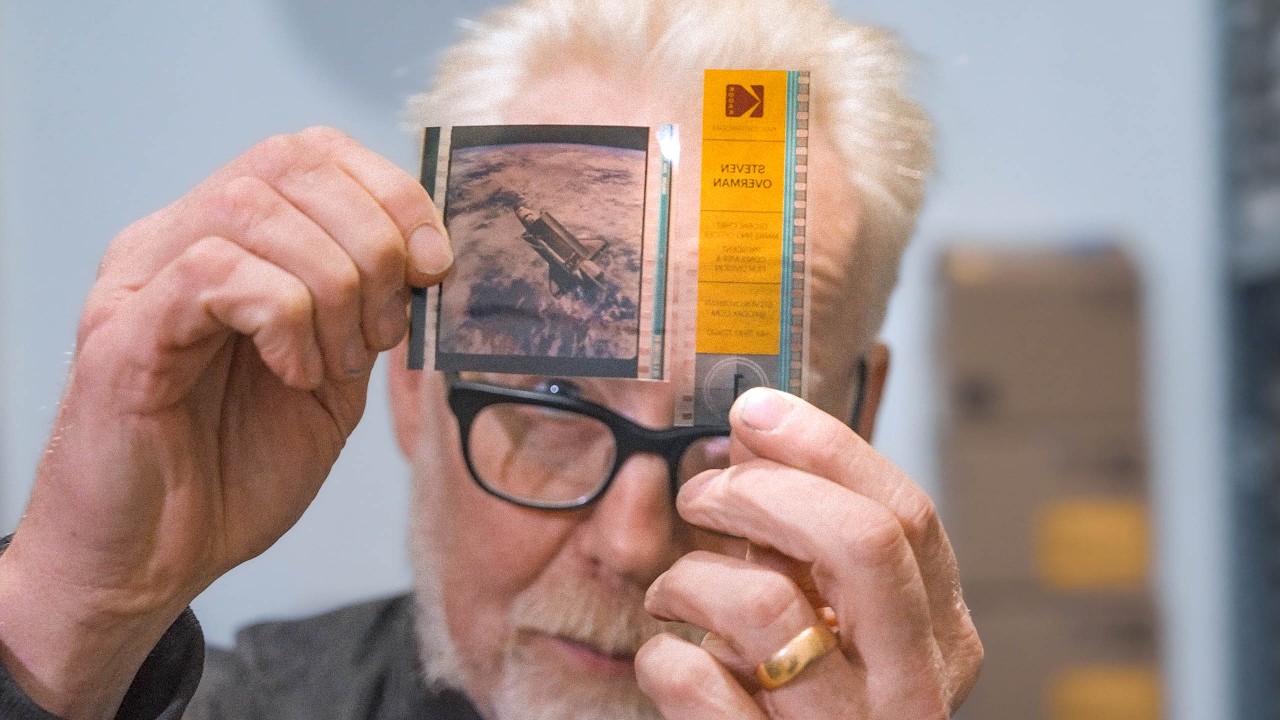
The original IMAX 65mm film scanner (serial number one, the only one ever built) uses a granite chassis for thermal stability, scans a single vertical line of pixels at a time at 8,424 slices per frame, taking 12.5 seconds per frame.
2
The new scanner captures IMAX frames in thirds, stitches them on a separate machine, reads Kodak edge key codes for precise frame targeting, and is more than an order of magnitude faster than the legacy machine.
3
IMAX film recording uses cathode ray tube (CRT) technology run through red, green, and blue filters to expose film — a reversed three-strip process — because CRTs exceed the precision of any currently available alternative.
4
As CRTs age they dim, slowing recording speeds from historical peaks down to 1 to 2.5 minutes per frame; of roughly 7 machines in the room only about 4 are functional, and replacement CRT stock is nearly exhausted.
5
Humidity and temperature are tightly controlled in both rooms because IMAX frames are large enough to physically warp from moisture absorption, which can shift focus between scanning sessions.
Key takeaways
→
Film and digital are not opposing workflows — virtually every IMAX film passes through both scanning and digital recording at some point in post-production.
→
The single biggest bottleneck for filmmakers relying on IMAX film recording is the aging CRT supply chain; late creative decisions about effects can collide with real, immovable physical deadlines.
→
Several groups are actively developing CRT replacements for film recording because no current technology matches CRT precision and reliability for frame-by-frame large-format exposure.
Notable quotes
“My joke is I got tired of watching paint dry. Grass grew too quickly for me, so I went into film recording.”
“Currently, we're running somewhere between a minute and 2 and a half minutes per frame. You thought 12 and a half seconds was slow.”
“25 years ago, somebody made this brilliant decision that has saved so many rolls of film.”
Worth watching?
✅
Worth watching the full video?
Watch if you want to actually see the machines in motion and hear Fred demonstrate threading, gate-pinning, and calibration live — the tactile details are genuinely surprising and the visual of a granite-bodied scanner is hard to appreciate from text alone.
Saved you some time? The creator still deserves a like.


Want this for your own channels?
Add the channels you follow. Every new video summarised and in your inbox the moment it drops. From £4/month.
Try it free